
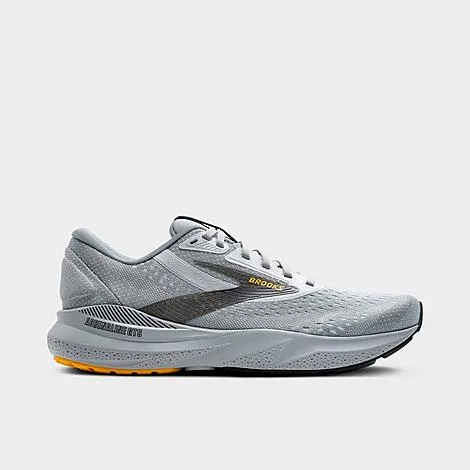
Brooks Adrenaline GTS 24 Review
We may earn a commission from some links on this page.
The Brooks Adrenaline GTS 24 is a stability running shoe: the version of Brooks's long-running Adrenaline line that the shops were selling before the GTS 25 arrived. It is built for runners who want the shoe to do a little of the work of keeping the foot from rolling too far inward as it lands, without the hard, wedged feel that old-style motion-control shoes had.
That makes it a shoe for a particular runner rather than for everyone. If your foot lands and rolls inward, a stability trainer like this one is the category to look at; if it stays neutral, a neutral trainer is the better and lighter choice. This review covers who the GTS 24 suits, how to get the size right online, what the Adrenaline line is known for and what to compare it with before you buy.
Table of Contents
Key Takeaways
- The Adrenaline GTS 24 is a daily stability trainer, not a race shoe and not a minimal one.
- It is for runners whose foot rolls inward on landing; a neutral runner should look at a neutral shoe instead.
- Modern stability is a gentle nudge rather than a hard wedge, and that is the approach this line takes.
- It is a road shoe for pavement and path, so it is the wrong choice for trail and rough ground.
- The GTS 25 is now the newer version of the same shoe, so check which one you are actually ordering.
What the Adrenaline Line Is For
The Adrenaline is one of the oldest names in Brooks's range, and it has always been the everyday stability shoe: the pair you put on for ordinary runs rather than for a race. GTS is the suffix Brooks puts on its support versions, so an Adrenaline GTS is the support build of the Adrenaline, sitting alongside the neutral Ghost and the plusher Glycerin in the same catalogue.
What that means in practice is that the shoe is designed around volume rather than speed. It is for the runs you repeat: the easy five kilometres, the steady hour on the pavement, the long weekend run at a talking pace. It is not the shoe for intervals or a parkrun personal best, where a lighter trainer does the job better, and it is not a walking shoe first, although plenty of people wear stability trainers for long days on their feet.
The Adrenaline line has been through a lot of versions, and the GTS 24 is one of the later ones. As with any long-running line, the changes between versions are usually small: a revised upper here, a different foam there. That is why the version number matters when you are ordering, and why you should read the listing for the exact shoe rather than assume every Adrenaline is the same.
Stability Without a Hard Sole
Stability shoes used to be blunt instruments. An older design put a stiff, dense wedge on the inner side of the midsole to stop the foot rolling inward, and you could feel it under your arch with every step. Modern stability shoes work differently: instead of blocking the movement, they guide it, using the shape of the midsole and the way the shoe sits under the foot to keep the landing from collapsing inward.
The Adrenaline line is one of the shoes that made that shift, and that is what the guided stability idea means. In use, the difference is that the shoe should feel like a normal running shoe for most of the stride and only make itself known when your foot starts to roll too far. You should not feel a hard lump under the arch, and you should not feel the shoe fighting your foot.
It is worth being honest about what a stability shoe can and cannot do. It is not a medical device and it will not fix a foot by itself. What it gives you is a little more support under a foot that needs it, which for a lot of runners is the difference between a run that ends comfortably and one that does not. If you have a diagnosed problem, take advice on it rather than expecting a shoe to solve it.
Detailed Features
Here is the shape of the shoe in plain terms. The product page for the colour you are buying is the place to confirm the details.
| Feature | What it means for you |
|---|---|
| Model line | Brooks Adrenaline GTS 24, the support version of the Adrenaline daily trainer |
| Version | One step behind the current Adrenaline GTS 25 |
| Type | Daily stability running shoe for road and pavement |
| Sizing | Sold in US men's sizes; check the listing for the width or widths on offer |
| Best for | Regular easy and steady runs, for a runner who wants a little guidance underfoot |
| Not for | Trail, racing or a runner who already lands neutral |
The important column is the last two. A stability trainer is a tool for a job, and the job is regular mileage with a bit of support. Buy it for that and it does exactly what it says; buy it for racing or for muddy ground and you have the wrong shoe.
Who the Adrenaline GTS 24 Suits
The obvious buyer is a runner who has been told they overpronate, or who has noticed their foot rolling inward and their arch collapsing as they land. If that is you, a stability trainer is the right place to start, and the Adrenaline is one of the standard answers in that category.
The second buyer is a heavier runner who wants more shoe underfoot. Stability trainers tend to be built a little more substantially than light neutral shoes, and the Adrenaline is a daily trainer with some substance to it. The third is the runner who simply likes the fit of the Adrenaline line and has worn earlier versions: if the GTS 23 or GTS 22 worked for you, this is the same idea with the usual small changes.
The buyer this shoe is not for is the neutral runner who wants something light and soft. If your foot does not roll inward, a stability shoe is extra weight and extra structure you do not need, and the neutral Ghost is the more sensible member of the same family. It is also not a trail shoe: pavement and path are what it is for, and a muddy field is where it stops being useful. The Brooks Trace 4 is another neutral option for everyday road running.
Daily Training and Mileage
A daily trainer is judged over months, not over one run, so the question is whether it holds up to repeat use. That is what this shoe is built for: the same easy loop, four or five times a week, in all weather, on the same pavement.
- Built for steady daily runs rather than fast sessions
- A support build for a foot that rolls inward
- Substantial enough for longer training runs
- Road and path use rather than trail
Replace a running shoe when the midsole stops feeling like it did, not when the outsole looks worn. The outsole usually outlasts the foam, so a shoe can look fine from underneath while the cushioning under your foot has already gone flat. Keep a note of roughly when you started a pair and replace it when easy runs start feeling hard.
Advantages and Disadvantages
The advantages are the ones that come with a well-established stability daily trainer. It is built for the running most people actually do: steady pavement miles rather than race day. It gives a runner who needs it a little more support under the arch without the hard feel of an old motion-control shoe. It is part of a line that has been through many versions, which means the shape and the sizing are known rather than experimental. And because the GTS 25 has replaced it, the GTS 24 is now the older version of the same shoe.
The disadvantages follow from the same facts. If you are a neutral runner, it is more shoe than you need, and you will feel the extra structure. It is not a light shoe, so it is not the one to pick for intervals or a race. It is a road shoe with no claim to being waterproof or to gripping mud. And buying last year's version means the colour and size you want may already be gone.
Two alternatives worth looking at are the newer Adrenaline GTS 25 if you want the current model, and the Brooks Glycerin GTS 23 if you want more cushioning under a similar amount of support.
Frequently Asked Questions
How does the GTS 24 fit different foot shapes?
It is a running shoe with a laced upper, so the fit is set by the laces and by the size you order. Measure your foot with the sock you run in and use the size chart on the product page; do not carry a size over from another brand. Check the listing for the widths it offers before you decide you cannot wear it.
Is the shoe suitable for plantar fasciitis?
That is a question for a clinician rather than for a shoe review. The Adrenaline is a stability running shoe, not an orthotic, and it does not treat a condition. If you have been advised to wear a supportive shoe, this is the right category to look in; if you have pain, get it looked at rather than buying a shoe to fix it.
How does the outsole cope with wet pavement?
It is a road shoe with a rubber outsole, which is the normal setup for wet pavement, but no running shoe grips like a trail shoe and wet painted lines and metal covers stay slippery whatever you wear. Slow down in the rain and treat it as a road shoe, because that is what it is.
Can it be recycled or repaired?
Running shoes are rarely repairable once the midsole has gone: the foam is the part that wears out and it is not something a cobbler replaces. Laces and insoles can be changed. For disposal, check whether the brand or a local running shop runs a take-back scheme for old pairs.
Does it come in different widths?
Brooks sells several of its running shoes in more than one width, and the Adrenaline line has long been one of them. The widths on offer change with the colour and the version, so open the listing for the pair you want and read the size list there instead of assuming a width is available.