
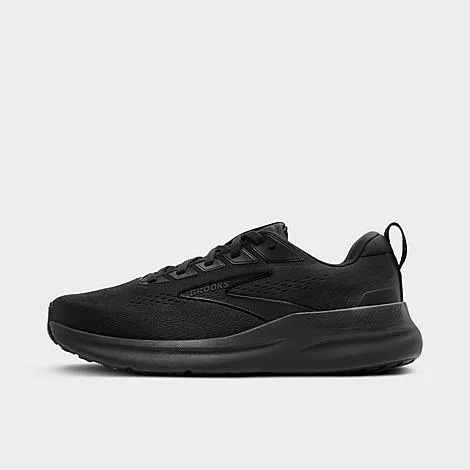
Brooks Men’s Beast GTS 26 Review: Comfort and Support
We may earn a commission from some links on this page.
The Brooks Beast GTS 26 is the newest version of Brooks' motion-control running shoe, the model in the line built for runners whose feet roll inward through the stride. Where most running shoes are built to stay out of the way, the Beast is built to guide the foot. Brooks sells it in standard, wide and extra-wide widths so a broad foot is not squeezed into a narrow fit. That makes it a shoe for steady training miles and long days on your feet rather than for speed work or racing. Below we go through the support, the fit and width options, the features that matter and the places where this kind of shoe gives ground.
Table of Contents
Key Takeaways
- The Beast GTS 26 is Brooks' motion-control shoe, made for runners who overpronate.
- It is sold in standard, wide (2E) and extra-wide (4E) widths, which matters more than length for this kind of fit.
- It is a motion-control shoe first: its job is to guide the foot, not to add bounce.
- It suits steady road miles, long shifts on your feet and walkers who want a shoe that holds the foot.
- If you want a light, fast shoe or a soft neutral trainer, look at another model.
How Motion Control Works
Motion control is the whole point of the Beast line, and it is the part you notice first. A motion-control shoe is built around guiding the foot rather than letting it find its own line, which is why the category exists for runners who overpronate. For a runner whose ankle rolls inward on every landing, that guidance is the difference between finishing a run comfortably and stopping with a sore arch.
The trade is that it is a specialised shoe. The Brooks Beast GTS 26 is not a neutral daily trainer, and a runner coming from a soft neutral shoe is moving to a different brief. If you have worn a stability or motion-control shoe before, the idea will be familiar: control through the stride rather than an easy, flexible feel.
That makes it a sensible choice for heavier runners, for anyone whose shoes wear down quickly on the inner side, and for people who stand or walk for hours and want the foot guided. It is not the shoe to buy if your stride is neutral and you like a flexible, low-slung ride.
Flat Feet and Width Options
Flat feet and overpronation usually come together, and they are the reason the Beast line exists. A low arch lets the foot roll inward under load, which is exactly what a motion-control shoe is designed to limit. The Beast GTS 26 is the model Brooks builds for that foot shape, so the support is aimed at the inward roll rather than at extra cushioning.
The width range is the other half of that comfort story. Brooks lists the Beast GTS 26 in standard, wide and extra-wide, and a wide forefoot in a motion-control shoe is a rare combination. If you normally take a wide fit, order the wide or extra-wide version rather than sizing up in length, because extra length changes where the flex point of the shoe meets your foot.
- Motion-control design: made to limit inward roll rather than to feel soft.
- Wide and extra-wide options: the fit a broad forefoot needs without going up a length.
- Three widths listed: standard, wide 2E and extra-wide 4E.
If your feet are neutral and comfortable in a normal-width shoe, this is more support than you need. A less specialised stability shoe such as the Brooks Adrenaline GTS 25 covers the same ground with less shoe around the foot.
Detailed Features
Brooks keeps the Beast GTS 26 close to the recipe of the previous versions, and each part is there for the runner who needs support rather than speed.
| Feature | What it means for your running |
|---|---|
| Motion-control design | Made to guide the foot and limit inward roll through the stride |
| Standard, wide and extra-wide fits | A broad forefoot gets room without extra length |
| Fit range | Standard, wide 2E and extra-wide 4E listed for this model |
| Best use | Steady road miles and long days on your feet |
The pattern is consistent: everything about the shoe is aimed at the job it is sold for, keeping the foot steady through a run, and nothing about the range is aimed at racing.
Benefits and Drawbacks Overview
On the plus side, the Beast GTS 26 does the job it is sold for. The support is the point of the model, the width range covers feet that most running shoes ignore, and the motion-control brief holds through a long run. Runners who overpronate and have struggled with shoes that felt unstable under the arch tend to find this kind of shoe reassuring.
The drawbacks come from the same design. It is a specialised shoe rather than an all-rounder, so a neutral runner is buying support they do not need. It is not the first pick for long easy days if you are used to a soft, rockered shoe. And the support is simply more shoe than a neutral stride asks for.
- Genuine motion control: support aimed at runners who overpronate.
- Width options: standard, wide 2E and extra-wide 4E.
- Specialised support: the support is the point, and it is not for every stride.
- Not for neutral runners: more support than a neutral stride requires.
Arch Support and Plantar Fasciitis
Runners with plantar fasciitis are often told to look for a shoe with a firm platform and good arch support, and a motion-control shoe like the Beast GTS 26 is what that advice points to. The shoe does not treat anything; what it does is guide the foot and limit the inward roll that puts extra strain through the arch. For someone whose soreness is worst in a soft, flexible shoe, a motion-control shoe is often the more comfortable place to start.
Two practical points matter more than the shoe itself. First, give a new pair a few short runs before you take it on a long one, because a new shoe takes adjusting to. Second, if pain continues or gets worse, that is a conversation for a clinician rather than a reason to buy another pair of shoes.
For a softer option in the same support family, the Brooks Glycerin GTS 23 puts Brooks' most cushioned midsole on a stability platform.
Frequently Asked Questions
How Does the Beast GTS 26 Fare in Wet Conditions?
Brooks does not sell the Beast GTS 26 as a water-resistant shoe, so treat it like any other road trainer in the rain: the upper will take on water and the shoe will feel sodden until it dries. Dry it at room temperature, away from radiators and out of a tumble dryer, because heat breaks down the glues in the sole.
What Widths Does the Beast GTS 26 Come In?
It is sold in standard width, wide (2E) and extra-wide (4E). If you have worn a wide Brooks shoe before, stay with that width; if you are between widths, the wide version is the safer choice in a shoe like this.
Is the Beast GTS 26 Right for Flat Feet?
It is the model Brooks builds for exactly that foot shape. Flat feet tend to roll inward, and the motion-control platform is designed to limit that roll. The wide and extra-wide fits also help, because a flat foot spreads out under load.
How Does the Shoe Perform for Long-Distance Running?
It is built for steady distance rather than for racing. The support stays consistent as you tire, which is when overpronation usually gets worse. It is not the shoe to pick for a personal best.
Is the Beast GTS 26 Suitable for Everyday Casual Wear?
Yes, if you want the support through a long day on your feet. It is a running shoe rather than a casual sneaker, so it looks the part, but walkers and people who stand for hours are a large part of who buys this kind of shoe.