

As an Amazon Associate, this website earns from qualifying purchases.
Choosing the right sandal starts with understanding foot shape and needs. Someone with wide feet or high arches should look for adjustable straps and supportive soles to prevent slipping or discomfort. Consider the activity—hiking requires secure, cushioned shoes, while casual strolls need comfort and breathability. Check fit by ensuring your foot sits securely without overhang, and leave just a tiny space at the toe. If these tips appeal, you’ll discover more ways to find perfect sandals for your lifestyle.
Assess Your Foot Type and Shape for Optimal Fit
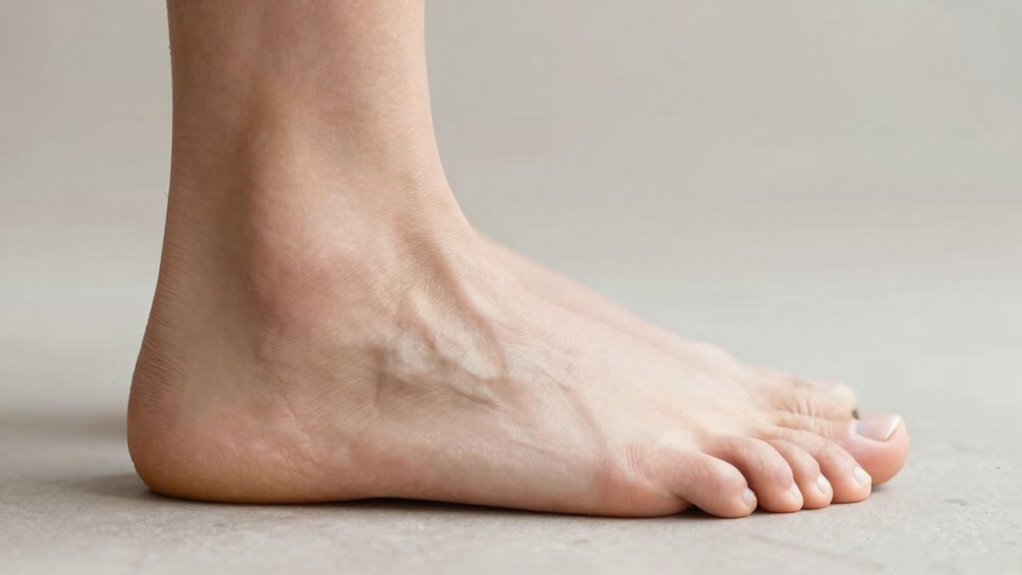
How can someone find the perfect sandal if they don’t know their foot type and shape? The first step is understanding foot width, which varies from narrow to wide, affecting how a sandal fits. Checking toe shape is also important: some toes are evenly spaced, while others might be crowded or spread out, influencing the style that feels best. Measuring both feet and noting differences helps since most people have a slightly larger or wider foot.
Adjusting straps can provide a customized fit, especially if the foot width or toe shape isn’t standard. Knowing these details ensures the sandal offers comfort without rubbing or crowding. By paying attention to foot width and toe shape, anyone can start choosing footwear that truly fits their unique foot structure.
Choose Sandals With Adjustable Straps and Support Features
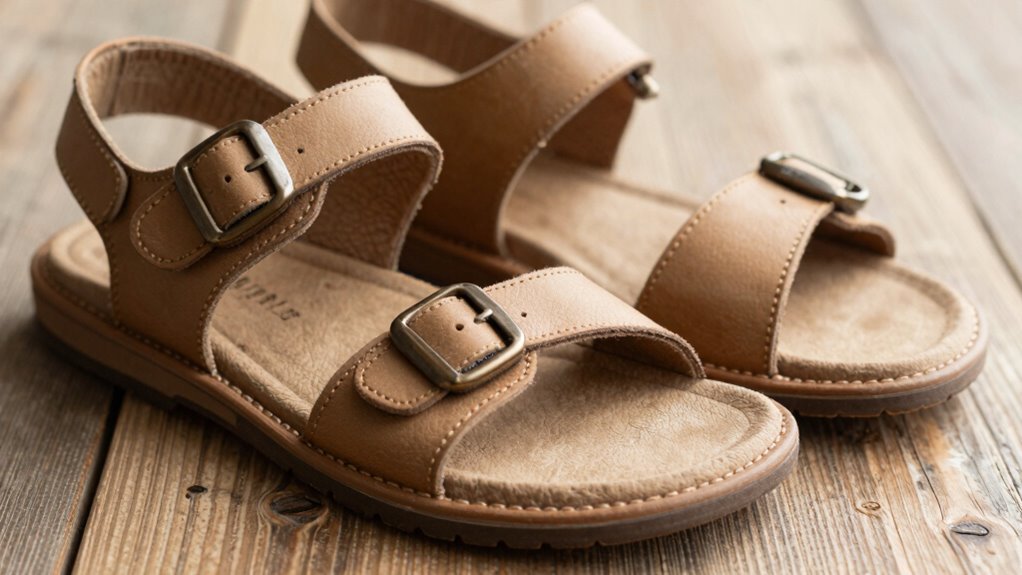
Choosing sandals with adjustable straps and support features can make a significant difference in comfort and fit.
Adjustable straps allow wearers to customize their sandals, ensuring a snug, secure feel that adapts to different foot shapes and widths. Whether tightening around the ankle or across the forefoot, these straps help prevent slipping and rubbing, especially during long walks or hot days.
Support features, like padded, flexible fastenings and secure buckles, add stability, accommodating foot swelling or movement. When paired with contoured footbeds, these adjustable elements provide a personalized fit that enhances support and comfort. The combination of adjustable straps and support features ensures a sandal that stays comfortably in place while supporting the foot’s natural shape, making all-day wear more enjoyable.
Consider Sole Thickness, Cushioning, and Material Quality
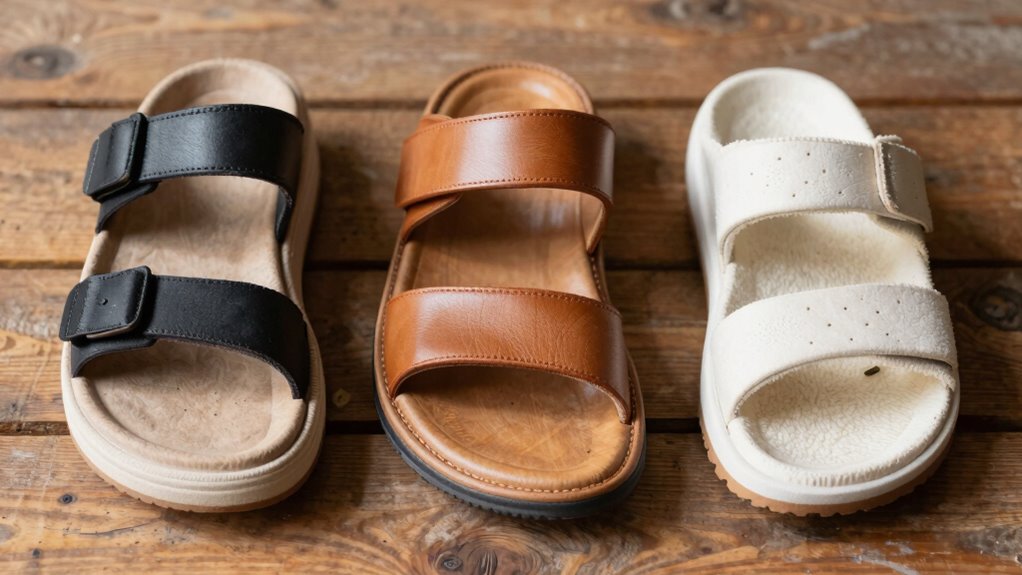
Have you ever noticed how some sandals feel like walking on clouds, while others leave your feet tired and sore? The key is considering sole thickness, cushioning, and material quality. Thicker soles often provide better shock absorption, making long walks more comfortable. Cushioning distributes pressure evenly, reducing hotspots and fatigue. Midsole materials like EVA or cork add to comfort by offering lightweight support and softness.
The table below highlights these features:
| Feature | Benefits |
|---|---|
| Sole Thickness | Provides shock absorption, stability, and arch support |
| Cushioning | Ensures even pressure, prevents fatigue, adds comfort |
| Midsole Materials | Light, flexible, enhances cushioning (EVA, cork) |
| Material Quality | Determines durability, breathability, and overall feel |
Choosing sandals with the right sole thickness, cushioning, and quality ensures all-day comfort and support.
Match Style and Width to Your Activities and Foot Needs
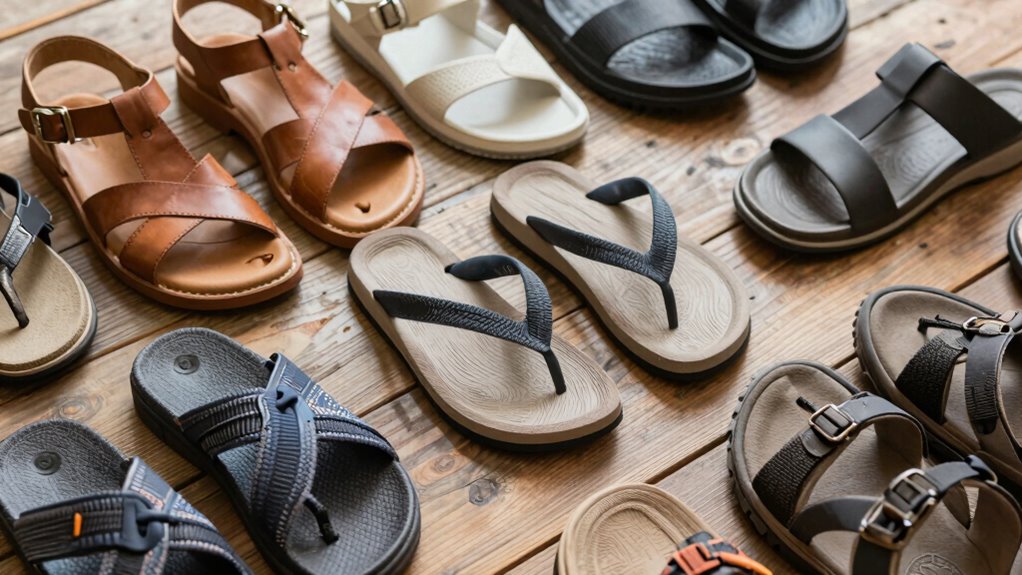
Matching the style and width of sandals to individual activities and foot needs helps guarantee comfort and support throughout the day. Adjustable straps are a smart choice because they allow wearers to customize the fit, reducing rubbing and slippage, especially during long walks or busy days. Wide-fit sandals are also important for broader feet, preventing pinching and discomfort, and some models are explicitly labeled as wide-fit for reassurance.
For added comfort, look for styles with arch-supportive footbeds. These help align the foot naturally and decrease fatigue after hours of wear. Whether choosing secure, strapped sandals for hikes or cushioned options for exploring, matching the sandal type to activity and foot needs ensures a comfortable, supportive experience that keeps feet happy all day long.
Identify Signs of Proper Fit and Select the Right Size and Style
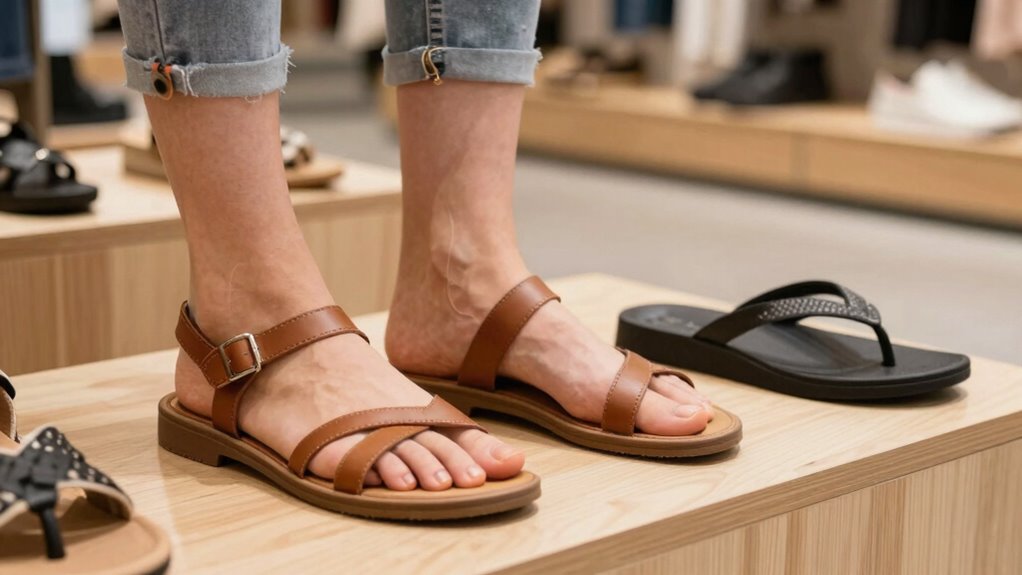
How can someone tell if a sandal fits just right? Proper fit means the foot sits securely on the sole, with no side spill or overhanging toes and heels. To check this, look for about 0.5 mm of space between the foot and the footbed’s edge—that’s enough room for comfort without slipping.
When feet differ in size, always use the longer foot measurement and consider sizing up for wiggle room. Proper sizing is key for comfort and support. Adjustable straps and buckles are helpful because they secure the sandal to the foot, reducing rubbing and slipping during movement. Remember, sandals fit best when they’re snug but not tight, and the style should match your activity needs, ensuring both comfort and stability.