
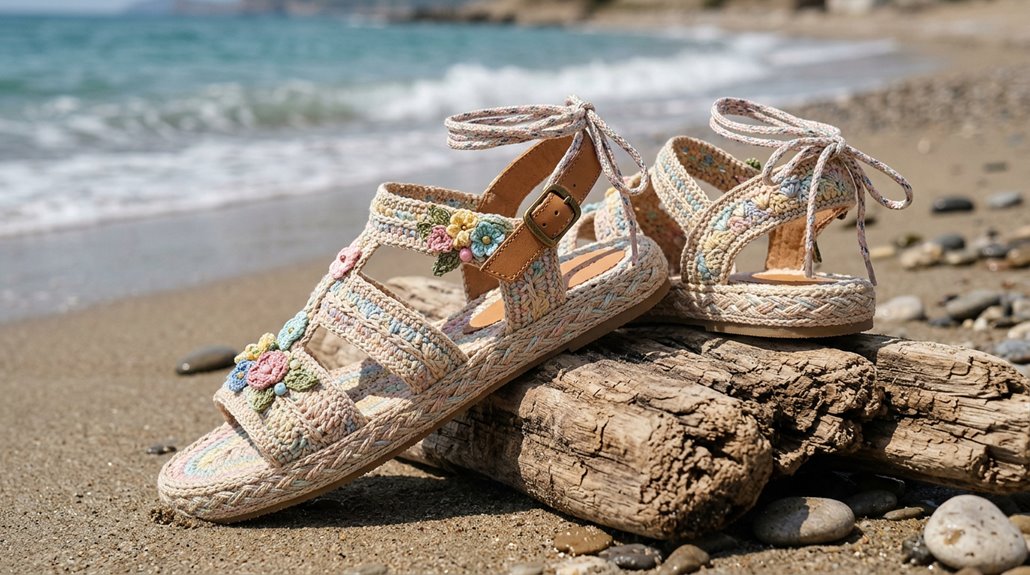
As an Amazon Associate, this website earns from qualifying purchases.
Choosing crochet sandals involves selecting comfortable, durable materials like cotton yarn, which stands up well to outdoor wear and maintains shape. Ensuring a good fit means paying attention to toe width and heel size, possibly testing the sole first. They’re perfect for casual outings, beach trips, or summer strolls, especially when paired with light clothing. The right soles, with non-slip features, add safety. A few tips could make your sandals both stylish and practical—stick around to discover more.
What Materials Are Best for Comfortable and Durable Crochet Sandals
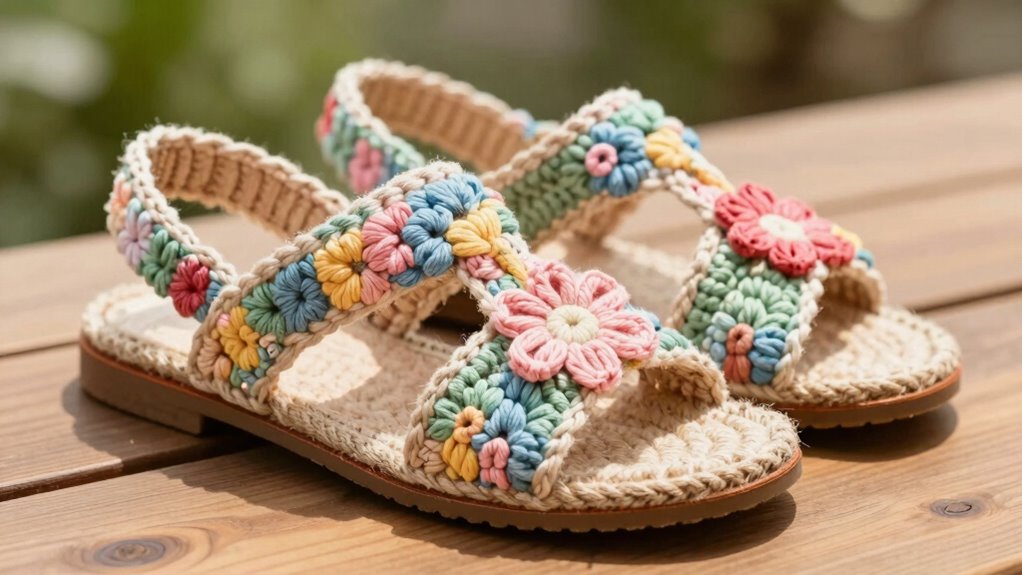
What materials work best for making crochet sandals both comfortable and durable? Cotton yarn is a top choice because it offers excellent durability and shape retention, making it ideal for frequent outdoor wear. Unlike wool or acrylic, cotton can withstand daily use without losing its form or comfort.
Worsted weight yarn, such as Knit Picks Dishie Twist or Lion Brand 24/7 Cotton, is commonly used, requiring around 90 yards for a pair. Additionally, a solid rubber sole or one with a non-slip bottom helps prevent slipperiness, especially when walking indoors or outside. To ensure strong attachment, crocheting directly into a reinforced sole or using a sharp tool to poke holes for secure fastening is recommended. These materials and features create sandals that are both stylish and long-lasting.
How to Ensure the Perfect Fit for Your Crochet Sandals
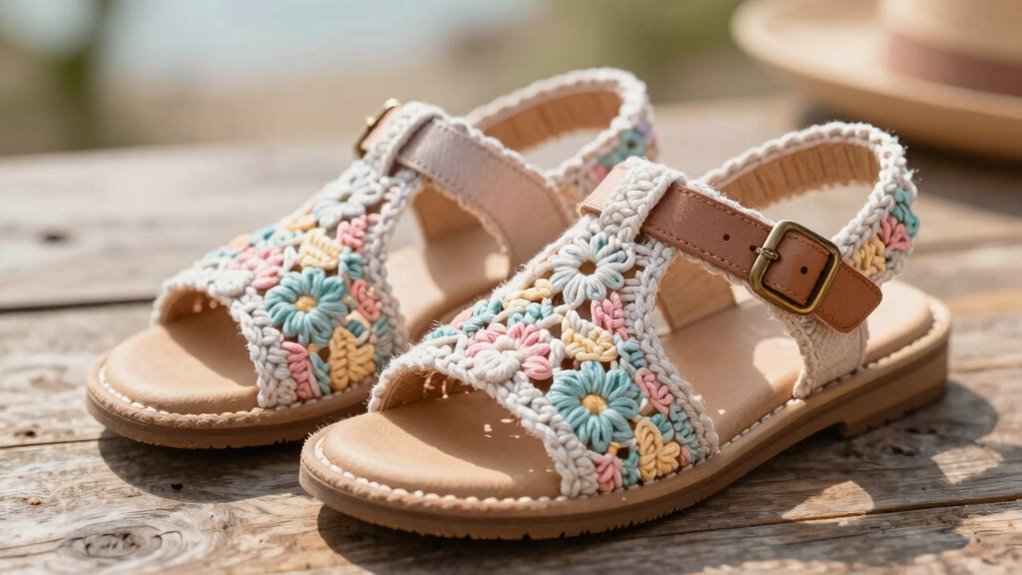
Achieving the perfect fit for crochet sandals involves a careful balance between snugness and comfort. To ensure the best crochet sandals fit, attention should be paid to the toe section width and heel holes, which can be adjusted for a tighter or looser feel. Sizing guidance suggests making toe pieces narrower and shortening straps to prevent slipping while maintaining comfort.
Using a personal gauge, such as 16 stitches and 20 rows in a 4-inch square, helps estimate your size during planning. It’s also important to match the sole size to your foot shape and test fit around the sole with initial stitches before completing the uppers.
Lastly, shaping the uppers to allow a little wiggle room ensures foot movement without sacrificing stability.
When and Where Should You Wear Crochet Sandals? Tips for Styling and Use
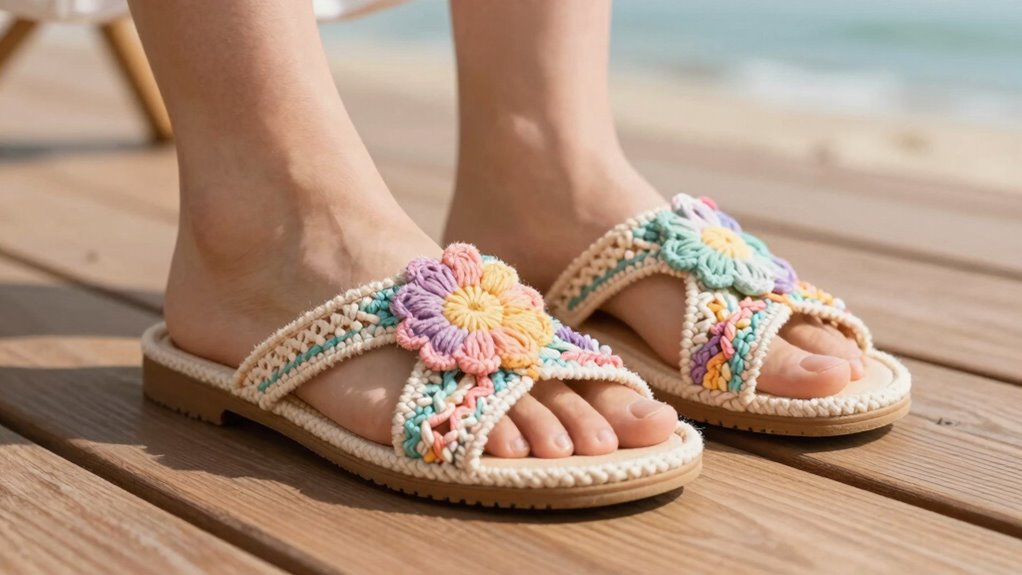
Have you ever wondered when and where crochet sandals are most appropriate to wear? These versatile shoes work well for casual outdoor wear, like beach trips or summer strolls. They’re perfect for sunny days, especially when made with durable cotton yarn that holds its shape and withstands outdoor elements.
For added safety, some crochet sandals feature rubber soles with punched holes, providing traction and preventing slips. This makes them ideal for uneven surfaces. When styling, consider pairing them with flowy dresses, shorts, or casual skirts. It’s also helpful to add anti-slip fabric or traction strips if you plan to wear them indoors or on slick surfaces. Proper fitting, such as adjusting strap length and toe sections, ensures stability during outdoor adventures. Whether you’re relaxing on a sunny patio or exploring a park, crochet sandals can be both charming and practical.
How to Choose the Right Sole and Traction Enhancements
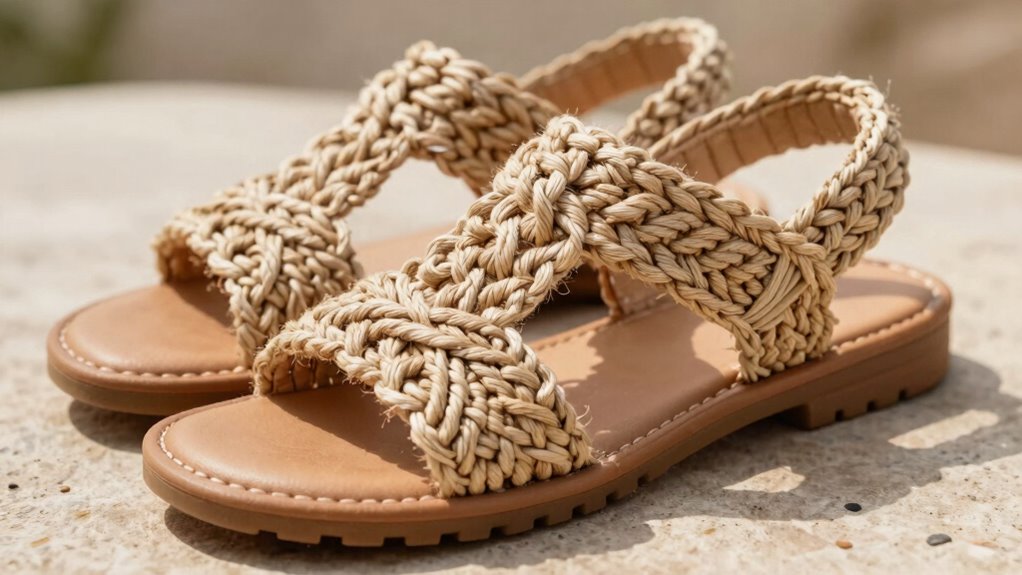
Choosing the right sole and adding traction enhancements can make a big difference in how comfortable and safe crochet sandals are to wear. For crochet shoes, selecting soles with a rubber or non-slip surface is essential, especially if the barefoot sandals crochet pattern involves open or delicate stitches. Some crafters even add hot-glue strips or textured fabric underneath for extra grip.
When creating a barefoot sandals pattern, ensure holes or stitching align with the outsole to keep everything secure. Nothing is worse than loose crochet!
For indoor use, a solid base like thin wood or sturdy plastic under the rubber sole can provide stability and prevent slipping on smooth floors. Testing on typical indoor flooring helps fine-tune traction, ensuring your crochet sandals stay put and feel comfy.
What Factors Influence the Overall Style and Customization of Crochet Sandals
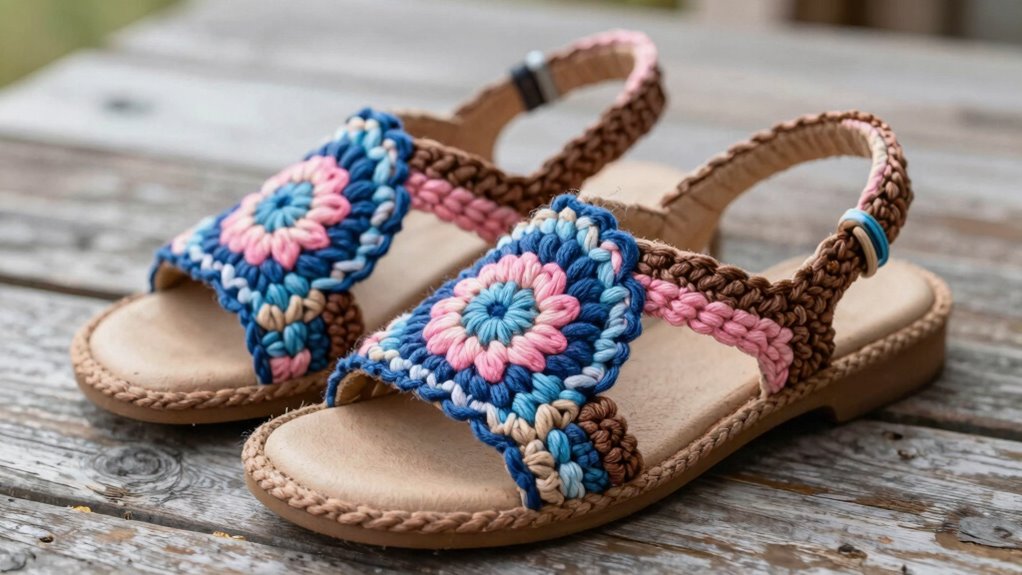
What really shapes the overall look and feel of crochet sandals? Material choices play a big role, affecting both style and durability. Strong cotton yarn is often recommended because it maintains shape and resists wear, making the sandals suitable for outdoor use. Conversely, wool or acrylic might not hold up as well outside.
The construction of the sole also influences the design. For example, attaching crochet uppers to pre-made rubber flip-flop soles with punched holes and hooks creates a casual, customizable look. Fit adjustments—such as trimming the toe section, shortening straps, or widening the heel—ensure comfort and a personalized style.
Finishing touches like anti-slip fabric or hot-glue strips can enhance both appearance and function, giving each pair a unique, well-crafted touch.