
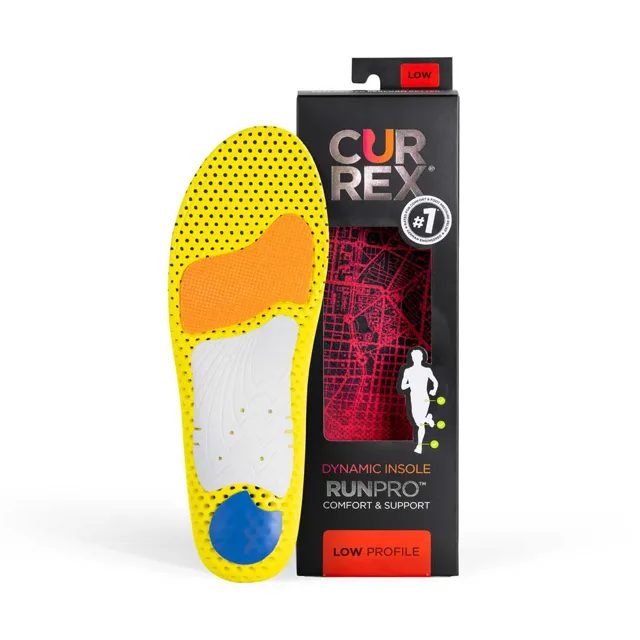
CURREX RunPro Insoles Review
We may earn a commission from some links on this page.
The CURREX RunPro is a full-length insole for running shoes, built around an arch support that comes in three profiles and a heel that is separated from the rest of the insole. The maker lists it for road, treadmill and trail running, and describes it as an athletic insole rather than a medical correction. This review goes through what the product page says about the arch, the heel, the cushioning and the fit, and where those choices help or get in the way for someone who spends long days on their feet.
Table of Contents
Key Takeaways
- A full-length insole for running shoes, listed by the maker for road, treadmill and trail.
- Three arch profiles, high, medium and low, chosen separately from the shoe size.
- A fully decoupled heel and zero heel drop, so the back of the insole moves with the foot.
- Dual-layer cushioning with extra padding at the heel and forefoot, in a 4 mm thickness.
- Trim-to-fit at the toe, sized for shoe widths up to 2E, with a 60-day guarantee.
What the RunPro Is Made For
CURREX builds one insole shape per activity, and RunPro is the running model. The product page lists running, walking, high-intensity interval training, triathlon, trail running, cross country and track as its uses, and the maker answers a direct question about trail shoes by saying the insole performs on road, treadmill and trail surfaces.
The important thing to understand is what kind of product this is. It is an off-the-shelf insole that changes how a shoe feels underfoot, not a moulded orthotic and not a correction for a diagnosed foot problem. The maker says as much on the page, describing it as designed for athletic performance rather than medical correction. That matters when you compare it with a prescription insert, because the job is different: this one is meant to sit in a normal running shoe, follow the foot and add support and cushioning under the arch and heel.
Because it runs the full length of the shoe, it changes the feel under the whole foot rather than just at the heel. If you are used to a thin factory insole, expect the shoe to feel fuller and slightly higher under the arch. If you only want a little softening at the back of the heel and prefer to keep the front of the shoe as it is, a short heel pad is a better shape than a full-length insole.
Arch Support and Fit
The feature the maker leans on is Dynamic Arch Technology. Instead of one fixed shape, the insole comes in three arch profiles, high, medium and low, so the support is matched to the way your foot moves. Choosing the profile is a separate decision from choosing the size, and the maker provides an at-home fitting guide to help you pick. Sizes run from XS to 2XL, covering men's 5 to 15 and women's 6.5 to 14, and the maker says the insole fits shoe widths up to 2E.
Fitting takes a minute of work. The RunPro is sold as a trim-to-fit insole: you take the existing insole out of your shoe, lay it on top of the CURREX insole and cut around the toe area for an exact fit. That keeps the heel and arch in the shape the maker intended while letting the front follow your shoe.
Thickness is the other number worth knowing. In a question on the product page the maker gives the insole as 4 mm thick, which is thinner than many aftermarket inserts. That is the detail to weigh if you have a shoe that already feels tight across the top of the foot, because a thicker insole can take up volume you do not have.
Cushioning and the Heel
The cushioning is built in layers. The maker lists dual-layer foam through the insole, a softer section under the heel for high-impact landings, and targeted cushioning at the forefoot for push-off. The foam is also described as managing moisture, which matters in a shoe you wear for a long session.
The heel is the part the maker talks about most. It is fully decoupled from the rest of the insole, which means the back of the insole can move with your foot instead of holding it rigid, and the insole is listed with zero heel drop. The maker's claim is a smoother transition from heel strike to toe-off, and that the decoupled shape helps the insole fit the shoe rather than fight it. Whether that suits you depends on the shoe: in a stiff trail shoe the flexibility is welcome, while someone who wants a firm, bracing platform should look at a different kind of insert.
The product page also carries buyer ratings, and the figure shown on the page is 4.6 out of 5 from 386 reviews. Treat that as a starting point rather than proof, since it is the shop's own summary and every foot is different. The maker lists a 60-day guarantee, which is the more useful thing to know if you are ordering a size and a profile without trying them first.
Detailed Features
The product page sets out the construction in a short list. These are the maker's own descriptions, not measured figures:
| Feature | What the maker lists |
|---|---|
| Arch support | Dynamic Arch Technology in three profiles: high, medium and low |
| Heel | Fully decoupled heel with zero heel drop |
| Cushioning | Dual-layer foam, with high-impact heel and targeted forefoot cushioning |
| Thickness | 4 mm, per the maker's answer on the product page |
| Moisture | The foam is described as managing moisture |
| Fit | Trim to size at the toe; fits shoe widths up to 2E |
| Sizes | XS to 2XL, men's 5 to 15 and women's 6.5 to 14 |
| Guarantee | 60-day guarantee |
Advantages and Disadvantages
Advantages
- Three arch profiles mean the support can be matched to a high, medium or low arch rather than guessed.
- The 4 mm build adds support without much extra volume inside the shoe.
- The decoupled heel and zero heel drop are designed to let the foot move naturally through the stride.
- Full-length coverage changes the feel under the whole foot, and the maker lists trail use as well as road.
- The size range is broad, the insole fits widths up to 2E, and the maker lists a 60-day guarantee.
Disadvantages
- You have to choose an arch profile and trim the toe area yourself before the insole is ready to use.
- It is an athletic insole, not a medical correction, so it is not a substitute for a prescription orthotic.
- The maker does not offer a wide width, so very wide feet are steered towards sizing up.
- Someone who wants a firm, high-volume pad under the heel only may find a full-length insole is more than they need.
Who It Suits
The RunPro makes most sense for someone who wears one pair of running or walking shoes for training and long days out, and wants the insole to follow the foot through both. The three profiles are the reason to pick it over a one-shape insole, the 4 mm build keeps it easy to live with in a shoe that is already snug, and the 60-day guarantee takes some of the risk out of ordering a profile by post. Hikers and trail runners can use it in trail shoes as well, since the maker lists trail running among its uses and the flexible heel suits a shoe that bends with the ground.
If you want a heavier, cheaper support insole for standing all day, the Dr Scholl's heavy duty support insole is the budget route. If you only want extra softening under the heel, a gel pad does that job with less change to the shoe.
Frequently Asked Questions
Does the RunPro work in trail shoes?
Yes. The maker lists trail running among its uses and says the insole performs on road, treadmill and trail surfaces.
How thick is the insole?
The maker gives the thickness as 4 mm on the product page, which is thinner than many aftermarket inserts.
Can I cut it to fit my shoe?
Yes. The maker's instructions are to remove the existing insole, lay it on top of the RunPro and cut around the toe area.
Will it fit wide shoes?
The maker says the insole fits shoe widths up to 2E, and points wide feet towards sizing up because there is no wide width.
Is it a medical orthotic?
No. The maker describes it as an athletic insole designed for performance, not medical correction.
What guarantee comes with it?
The maker lists a 60-day guarantee on the product page.