
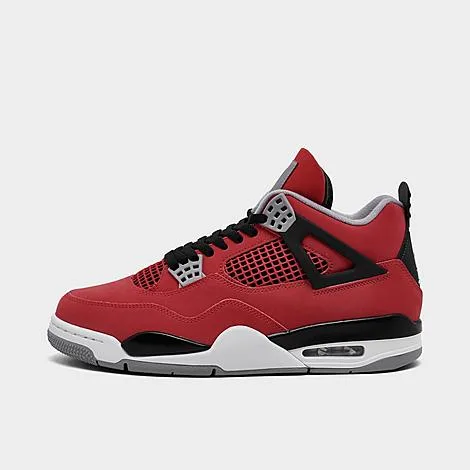
Air Jordan 4 Retro Review: Fire Red
We may earn a commission from some links on this page.
The Air Jordan 4 Retro in the Fire Red colourway is the 1989 basketball shoe in a white, black and red palette. The design is the one that made the fourth Jordan a classic: a mesh-and-leather upper, the plastic wing eyelets that hold the laces, visible Air cushioning in the sole, and the Jumpman on the tongue and heel. This review goes through what those parts do, how the shoe fits and wears today, and what to know before you order a pair.
Table of Contents
Key Takeaways
- The Air Jordan 4 Retro in Fire Red is the 1989 design in a white, black and red colourway.
- The plastic wing eyelets, mesh netting on the side panels and tongue, and visible Air unit are the parts that define the shoe.
- It is a retro lifestyle shoe now. The shape and the cushioning are from 1989, not from a current performance basketball line.
- The upper materials change with the colourway, so check what the Fire Red pair is made from before you plan how to clean it.
- Start with your usual sneaker size and check the room in front of the longest toe, trying them on with the socks you wear.
The Air Jordan 4 in Fire Red
The Air Jordan 4 debuted in 1989 as Michael Jordan's fourth signature shoe, and the Retro versions reissue that design rather than updating it. The Fire Red colourway gives it a white base with black detailing and red accents, one of the most recognisable palettes on the model.
What the Fire Red pair keeps is the structure of the original: the mesh panels that let air through the upper, the plastic wings on either side that hold the laces, and the cut-out in the sole that shows the Air unit. Those three details are what people mean when they say a shoe looks like an Air Jordan 4.
Jordan Brand has reissued the AJ4 in many colourways over the years, and the retros sell as everyday sneakers rather than as shoes to play in. That matters for how you judge the Fire Red pair: it is a lifestyle shoe with a basketball shape, and it should be bought for how it looks and how it fits, not for modern court performance.
Design That Has Lasted
The AJ4's design has stayed in production for more than three decades because the parts work together: the mesh keeps the upper from looking heavy, the plastic wings give the laces something solid to pull against, and the visible Air unit breaks up the side profile.
It is also a shape that has moved from the court to the street without looking out of place. A white and black pair with red accents sits easily with jeans, shorts or track pants, which is why the colourway keeps coming back.
The trade-off is the same one every retro has: the shoe is built to the 1989 pattern, so it is heavier and less flexible than a modern knit trainer, and the cushioning is the original Air setup. That is part of the appeal for most buyers, and a reason to pass for anyone who wants a light everyday shoe.
Detailed Features
The Air Jordan 4's feature set is the same across its retro colourways:
| Feature | What it does |
|---|---|
| Plastic wing eyelets | Hold the laces on the sides of the upper and give the shoe its signature look |
| Mesh netting | Panels on the side and tongue that let the foot breathe |
| Visible Air unit | The cut-out in the sole that shows the Air cushioning from the side |
| Padded collar | Padding around the ankle for everyday wear |
| Jumpman branding | On the tongue patch and the heel |
Two structural details are worth pointing out because they affect wear. The plastic wings are rigid, so they hold the lacing firm but do not stretch with the foot; and the mesh panels are the part of the upper most exposed to scuffs, so they are what to watch if you wear the shoe hard.
Comfort and Wear
As a retro, the AJ4 gives you 1989 comfort: a padded collar, a firm sole with an Air unit in the heel, and a fairly flat footbed. Buyers who wear modern running shoes will notice the difference straight away, because there is much less foam under the forefoot.
For everyday wear, that is usually fine. The shoe is at its best standing and walking rather than running, and the padded collar keeps the ankle comfortable over a long day. If you need more underfoot cushioning or arch support, a replacement insole is the usual answer, and the shoe has to be bought with room for it.
Sizing is the part to get right. Retro Jordans are generally cut to your usual sneaker size rather than running small, but the toe area is where the fit is decided: you want room in front of the longest toe without the heel slipping. Try the pair on with the socks you will wear, and if you wear an insole, with that in place.
Build Quality
The Fire Red pair is a general-release retro, so the build is the standard Jordan Brand retro build rather than a premium or collaboration version. The upper material varies by colourway, and Jordan Brand has used leather, nubuck and suede on different AJ4 retros, so check the material named on the listing for the pair you are buying.
What holds up over time is the structure: the plastic wings, the rubber outsole and the stitched panels are all durable parts. What needs care is the upper, especially mesh and any suede or nubuck panels, which mark and crease more readily than smooth leather.
- Keep a shoe tree or stuffed paper in the pair between wears to hold the toe shape.
- Brush dust off the mesh rather than wiping it into the panels.
- Clean according to the upper material: leather wipes for smooth panels, a soft brush and suede cleaner for nubuck or suede.
- Let a wet pair dry at room temperature, away from radiators, and never put them in a machine.
Add-ons and Another Jordan
Two things readers ask about with a retro Jordan: an insole for more comfort in a firm retro sole, and a second Jordan silhouette for days when the AJ4 feels like too much shoe.
Frequently Asked Questions
Can the Air Jordan 4 Be Worn for Basketball?
It was a basketball shoe in 1989, and it can still be worn to shoot around in, but it is not built to current performance standards. Modern basketball shoes are lighter and use cushioning designed for today's game. Most people buy the retro as an everyday shoe, and that is what it is best at.
How Do I Clean and Look After Them?
Match the cleaner to the material. Smooth leather panels take a damp cloth or leather wipe, mesh takes a soft brush, and nubuck or suede needs a dedicated brush and cleaner used sparingly. Do not soak the shoe or put it in a washing machine, and let it dry at room temperature.
Do Air Jordan 4s Run True to Size?
Retro Jordans are generally sold in your usual sneaker size, so start there. The fit through the toe is what decides it: leave a little room in front of the longest toe and make sure the heel stays put. Try them with the socks you wear and with any insole you plan to use.
How Do I Stop the Toe Box Creasing?
Keep the shoes stuffed or on shoe trees between wears, and avoid driving in them if you want the toe to stay flat. Crease inserts and toe guards help, but the main thing is not to leave the pair collapsed in a bag or a pile.
Where Does the Fire Red Sit in the Range?
Fire Red is one of the original colour stories on the Air Jordan 4, built around a white base with black and red details. The same shoe comes in other palettes, including the Imperial Purple and a women's Pale Ivory pair, so the choice is really about the colour you want.