
As an Amazon Associate, this website earns from qualifying purchases.
When choosing high heels, understanding foot shape is key—wider feet need roomy toe boxes and sturdy heels, while narrow feet benefit from snug fits and adjustable straps. Pick heel heights suitable for the occasion—around 1.5 inches daily or slightly higher for special events—and match styles to your arch type for comfort and support. Prioritize a good fit, stability, and consider supportive insoles. Small details, like heel tips and proper storage, can extend comfort and wear. Explore further tips to find your perfect fit.
Understand Your Foot Shape and Needs Before Choosing Heels
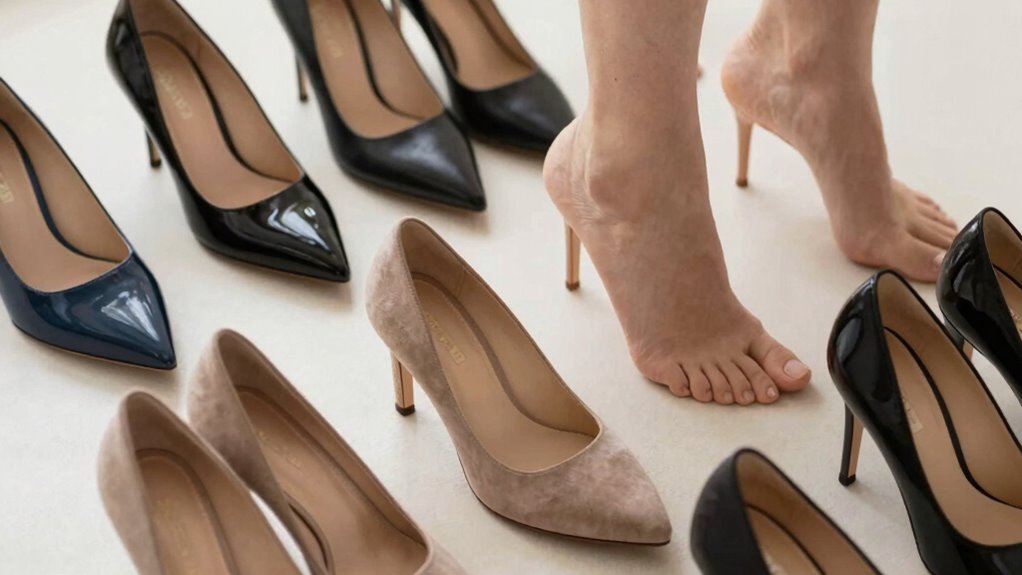
Have you ever wondered why some high heels feel comfortable while others seem impossible to wear? It often comes down to understanding foot shape, which includes factors like arch height, width, and deformities such as bunions or hammertoes. These traits influence which toe box and heel style will fit best. For example, a wider foot benefits from a roomy, square toe box, while a narrower foot might prefer an almond shape.
Cushioning also plays a crucial role; well-padded insoles support comfort by reducing pressure and absorbing shock. Knowing your foot shape helps you choose heels that fit naturally, preventing pain and discomfort. When selecting shoes, pay attention to the toe box and cushioning to ensure a supportive, comfortable fit tailored to your unique foot needs.
Determine the Right Heel Height for Comfort and Occasion
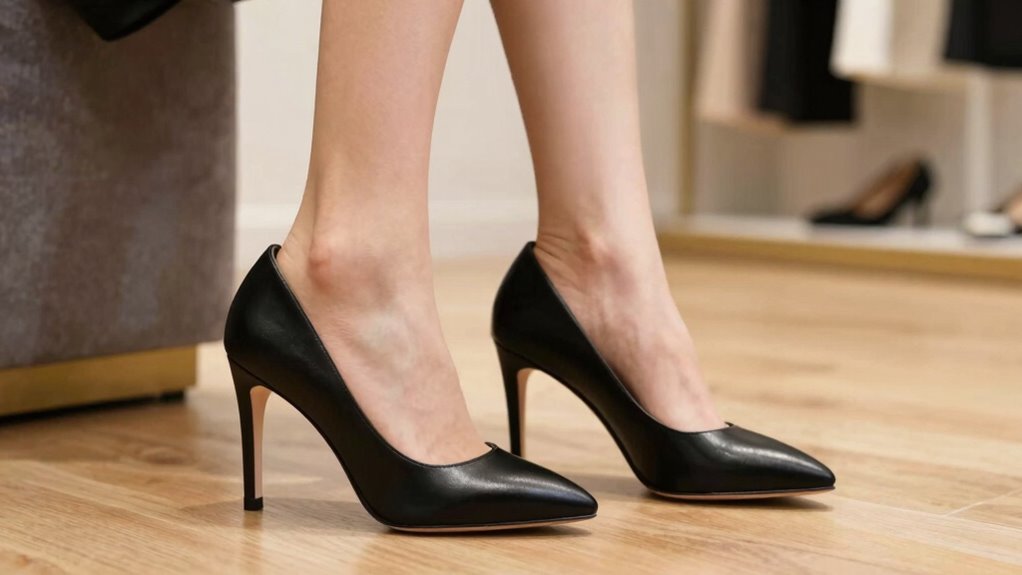
Choosing the right heel height is essential for balancing comfort with style, and it often depends on the occasion. For everyday wear, about 1.5 inches offers comfort without sacrificing style. If you’re heading to a casual event or work, 2-inch heels are a practical choice, reducing foot fatigue.
For more formal settings like the office or evening outings, 3-inch heels strike a good balance, blending elegance with manageable comfort. Higher heels, such as 4 inches or more, are common for parties or nights out but may require practice and breaking in.
To stay comfortable, consider these tips:
- Start with lower heels if you’re new to heels
- Use platforms to ease wearability of taller heels
- Limit long wear in very high heels
- Choose occasion-appropriate heel heights
- Prioritize comfort to enjoy your time in heels longer
Select Heel Styles That Match Your Foot Width and Arch Type
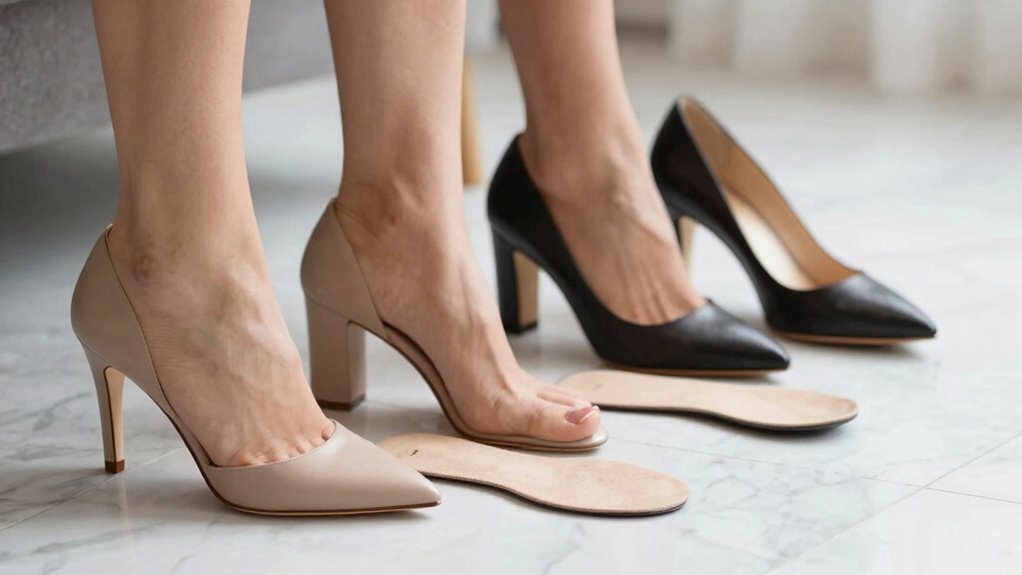
When selecting heel styles, it’s helpful to take into account how well they match the shape and size of your feet. For wider feet, open-toe styles with a roomy toe box width, like round, square, or almond toes, are comfortable choices. These are especially suitable with chunky block heels that evenly distribute weight and reduce pinching.
Narrow feet, on the other hand, benefit from pointed-toe heels or straps that fit snugly, along with heel grips or inserts to prevent slipping. For high-arched feet, mid-height block or wedge heels with built-in arch support help lessen forefoot pressure, providing extra comfort.
Flat feet do well in low-to-mid heels with arch support or orthotic-friendly footbeds. Matching toe box width and arch support to your foot shape ensures both comfort and style.
Prioritize Fit and Support for Long-Lasting Comfort
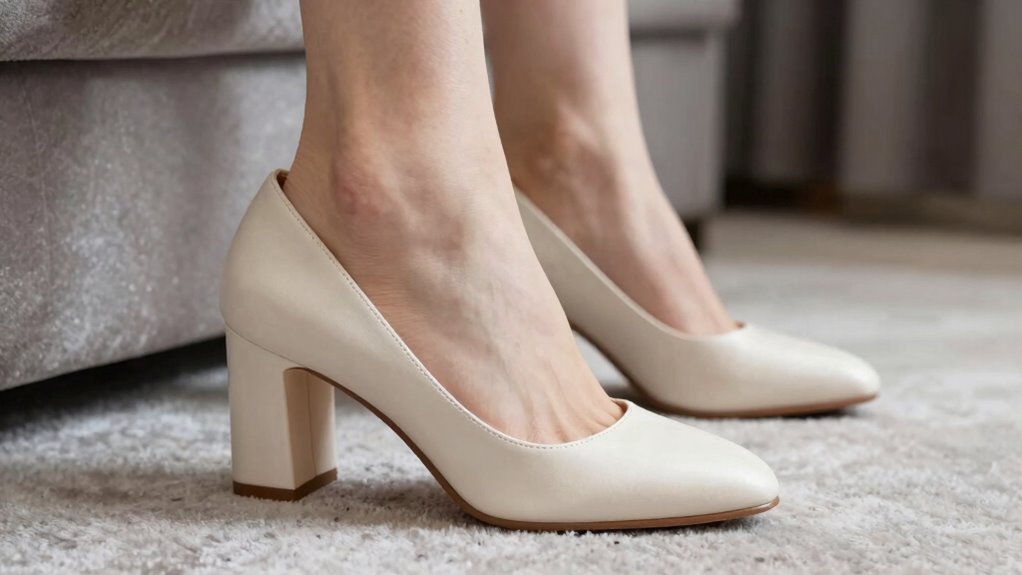
Ever wonder why some heels feel comfortable all day while others cause discomfort? Proper fit and support are key. When trying on heels, measure feet in the afternoon when they’re slightly swollen, ensuring a secure fit without gaps. Prioritizing arch support and a cushioned footbed helps distribute weight evenly, reducing fatigue.
For stability, choose heels with a solid base, such as chunky block heels or wedges, which improve balance and lessen forefoot pressure. Also, select toe-box shapes that match foot width, like square or almond, rather than pointed toes that squeeze the toes and cause pain. Before buying, walk on different surfaces to test stability.
Keeping these tips in mind ensures long-lasting comfort, making stylish heels a pleasure rather than a pain.
Match Heels to Your Outfit and Personal Style Goals
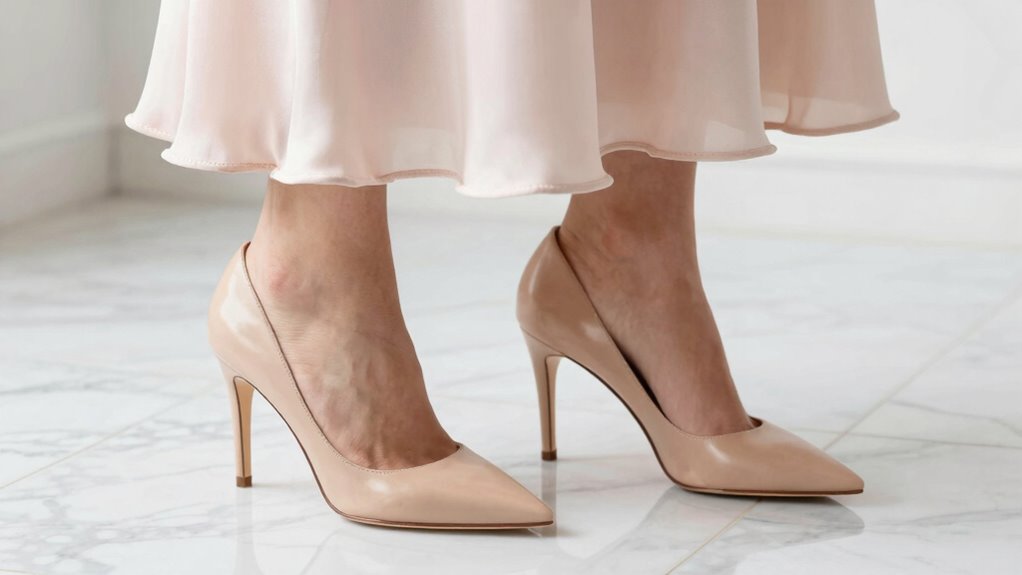
Have you ever noticed how the right heels can elevate an outfit or make you feel more confident? Matching heels to outfit goals involves considering both style and comfort, ensuring your look is cohesive. For workwear, neutral tones and simple heel types like pumps or classic stilettos blend seamlessly, maintaining professionalism.
For parties or special events, bold colors and embellishments add flair, with heel shapes like pointed-toe or strappy styles enhancing the vibe. Personal style goals also matter—wider feet may prefer round or square-toe heels for comfort, while those aiming for a sleek silhouette might choose pointed toes. Pairing heel types with outfit proportions, such as contrasting heels with straight-leg trousers, creates a balanced, stylish look.
Texture and color coordination, like matching a patent leather heel with a gem-embellished purse, ties the ensemble together effortlessly.
Incorporate Supportive Accessories and Insoles for Better Fit
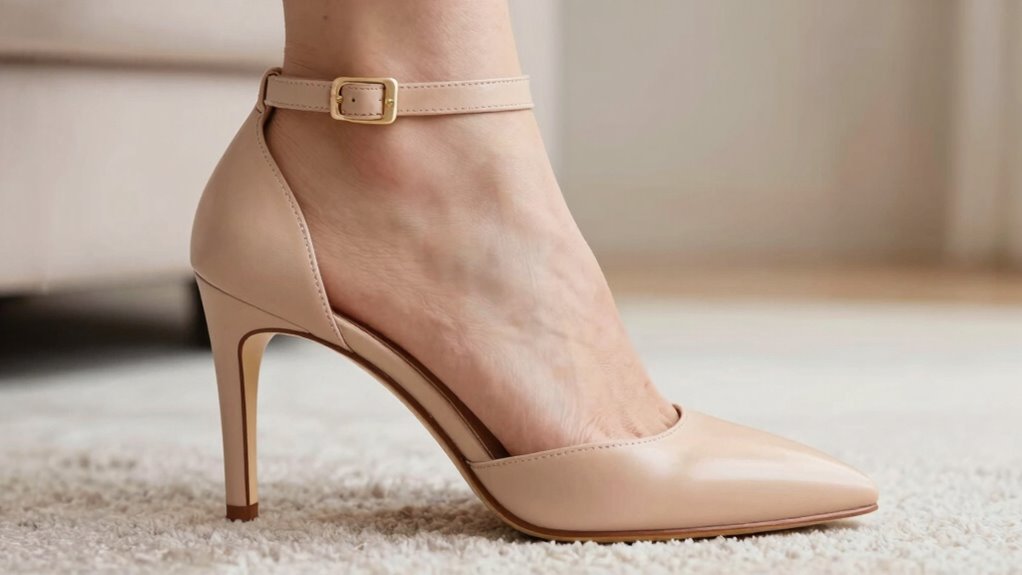
Incorporating supportive accessories and insoles into high heels can make a noticeable difference in comfort and fit. Foot Petals inserts mold to the foot’s shape, using premium foam and shock-absorbing gel to reduce pressure, making those long walks more bearable. These insoles are lightweight, breathable, and discreet, providing tailored cushioning for different foot shapes.
For wider feet, open-toe block-heel combinations help relieve pressure on the toes and balls of the feet. Narrow feet benefit from strap cushions and adjustable straps that prevent slipping and blisters. Arch-support cushions and ¾ inserts target shock absorption at the heel and ball of the foot, offering relief for high arches or flat feet. These small additions can noticeably improve the overall experience of wearing high heels.
Maintain and Care for Your Heels to Ensure Longevity and Comfort
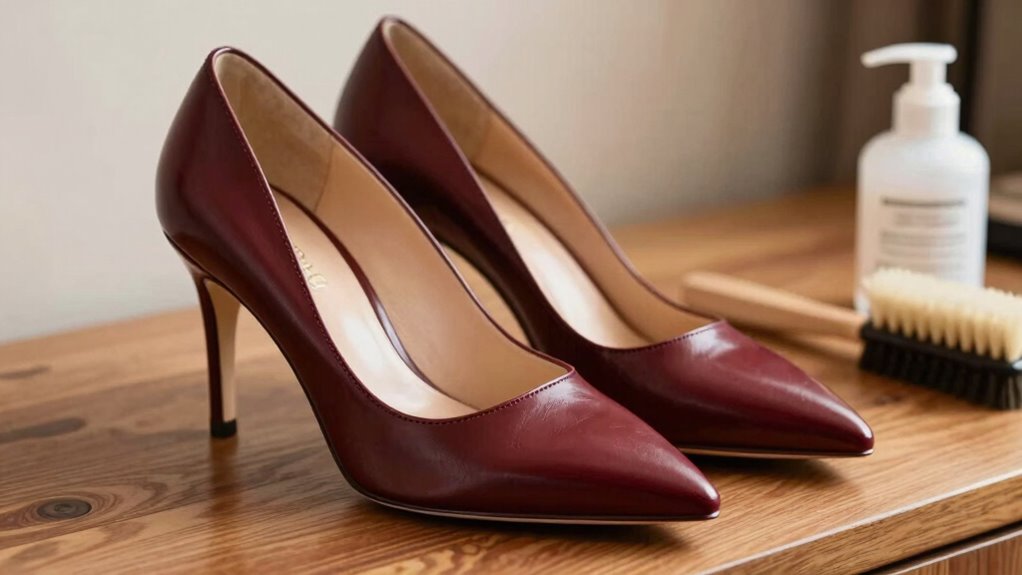
Taking good care of high heels is just as important as choosing the right pair. Regular heel maintenance helps keep heels stable and looking great. Checking heel tips frequently is key; worn or uneven tips should be replaced to prevent damage and ensure stability when walking. Rotating heels can reduce wear on specific pairs, supporting foot health over time.
After each wear, light cleaning with material-appropriate products preserves the appearance and extends the life of the shoes. It’s also wise to inspect for scuffs or chips on the heel base, back, and sides. Early repairs can prevent bigger problems later. Proper storage and care, like using dust bags, protect heels from creasing and shape loss. These simple steps keep heels comfortable, stylish, and long-lasting.